

Last Updated on April 21, 2026
Many users have encountered the QuickBooks error 6000 103 when trying to open a company file. This can be an annoying problem, as you will not be able to work properly. Moreover, restoring a backup company file in QB Desktop or accessing it over a local or shared network will also be a hassle. The code you see on your screen is a part of the 6000 error series that takes place when the company file is not opening.
There are some reasons why this problem manifests itself on your PC, some of which include a damaged or corrupted company file, or more than one host computer. However, we have some working solutions to work around this error in QuickBooks Desktop with easy steps. In this article, we will explore all the possible causes for this issue and methods to eliminate it effectively.
If you need support with the QuickBooks error 6000 103! Our specialists are just a call away. Reach out at our toll-free number 1.855.738.2784 and let our Accounting Helpline’s experts guide you.
Understanding the Root Causes for QuickBooks Error Code 6000 103
Go through the following list to learn the leading factors for this issue and explore the source of why the company file won’t open.
- Firewall and antivirus software are blocking QB Desktop, which is why it cannot connect to the Intuit server.
- The Registry files may be corrupted and cause interference with the QB Desktop.
- You did not sign in or log in as the admin user on your computer system.
- Damaged or corrupted network data (ND) and transaction log (TLG) folders, which are essential configuration documents.
- The Windows operating system may be damaged or missing crucial components.
- QuickBooks is running slowly because there are multiple programs open at the same time, impacting its performance.
- The folder containing the data records on your File Explorer may have gotten damaged.
- It is possible that the multi-user mode is being hosted by multiple server computers or workstations.
- If you lack the admin permissions, then accessing the documents may not be possible.
- The server PC and the workstations may have lost the connection.
- You might not have set up the QuickBooks Database Server Manager properly.
- The application might be installed improperly, or the installation files are damaged.
- Your multi-user mode may not be hosted properly to share the file over a network.
- The backup may have gotten corrupted on the external device or the network drive, which is why the company file won’t open.
Now that we have established a clear understanding of why the QuickBooks error 6000 103 occurs, leading to the company file not opening problem. Let’s explore how this issue can hinder your productivity.
Impacts of the Error Code 6000 103 in QuickBooks Desktop that You can Observe
The following problems are often faced when you encounter this issue. You can notice these occurring on your system as well.
- You will experience that QuickBooks is running slowly or experiencing frequent glitches.
- There will be a decline in the performance of your Windows operating system.
- Your system may fail to support running multiple programs at once and start lagging.
- QB Desktop keeps freezing or crashing whenever you attempt to open it.
- You will not be able to convert an accountant’s copy transfer file to the accountant’s copy.
Using QuickBooks while such problems take place is scary already, but it affects the Windows OS as well. Therefore, you must address it ASAP, so move to the next section.
Delve into Troubleshooting Methods for QuickBooks Error 6000 103
We are already aware of the reasons that lead to this error, making it easier to troubleshoot with simple steps. We have listed down a number of solutions for you that are easy to implement and quite efficient in fixing this error.
Method 1: Review the Multi-User Mode Across Workstations
One of the primary reasons for QuickBooks error 6000 103 is that the company file may be being hosted by more than one server computer. Therefore, the first resolution to overcome it should be making sure that multi-user mode is set up correctly.
Steps to Perform on the Workstations
- Open the QuickBooks Desktop application.
- Select the File menu from the top bar.
- Choose the Utilities option.
- Hit the Stop Hosting Multi-User Access button.

- If you see the Host Multi-User Access button, then leave it as it is. Now, moving on to fix QuickBooks error 6000 103.
- b. Steps to Perform on the Host Computer
- Log in to QB Enterprise
- Open the File menu.
- Tap on Utilities.
- Choose Host Multi-User Access.

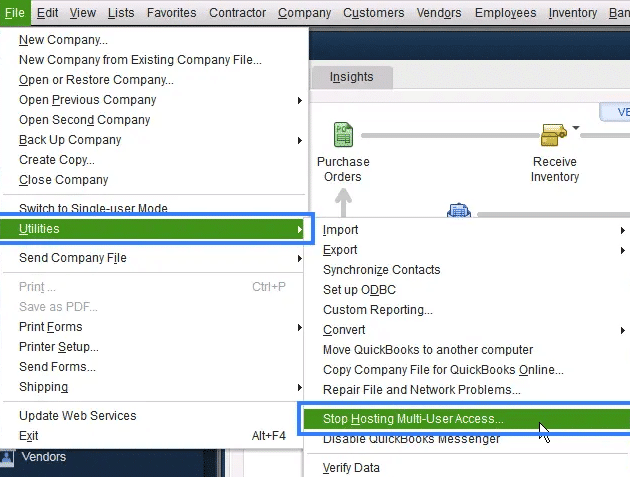
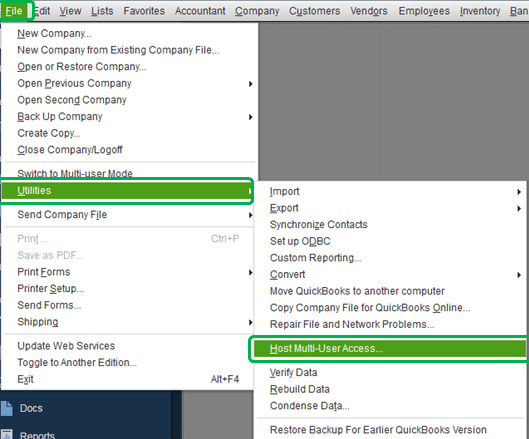
If your screen displays the Stop Hosting Multi-User Access button, then leave it as it is. In case you find that the QB multi-user mode is not working, refer to this guide and get it back on track. Now, moving on to the next step.
Method 2: Utilize the QuickBooks File Doctor Tool
The leading cause of this problem can be a damaged or corrupted company file. Therefore, you must repair it through the utilities present on QB Tool Hub.
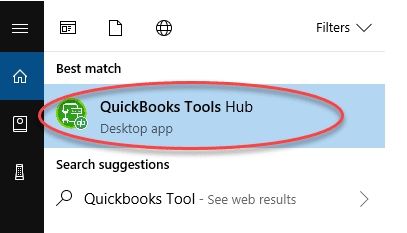
- Download and install the QuickBooks Tool Hub.

- Open the QB Tool Hub.
- Go to Company File Issues from the left panel.
- Continue with Run QuickBooks File Doctor.

- Tap Browse to select your company file.
- Then, hit Check your File followed by Continue.
- If asked, then enter the admin password and press Next.
- Wait until the tool is done running repairs.
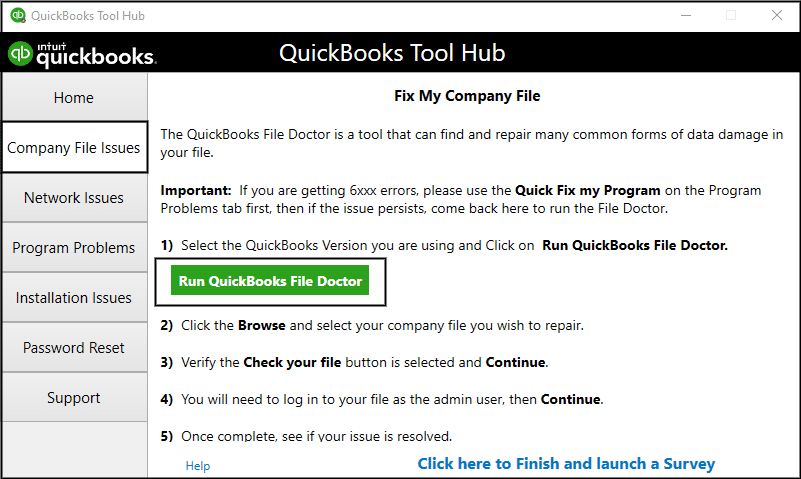
Once the process is over, your file will be good to go to open it without any problem. In case your QuickBooks File Doctor is not working, troubleshoot it immediately with this guide. Proceed to the next section if the problem continues.
Method 3: Change the Name of ND and TLG Files
These are configuration files for QuickBooks Enterprise that may lead to QuickBooks error 6000 103 when they are damaged or corrupted. In order to avoid this issue while opening the company file, you can rename the network data (ND) and transaction log (TLG) files with the following steps.
- Open the QB Enterprise.
- Press the F2 key on your keyboard.
- The Product Information window will open.
- Select File Information and note down the shown path.
- Hit Windows and X keys.
- Choose File Explorer from the menu.
- Head to the path you noted down.
- Or, locate the folder containing the company file.
- Find files with the ND and TLG at the end of their names.
- company_file.qbw.nd
- company_file.qbw.tlg
- Right-click on each and tap Rename.
- Add OLD after their name and press Enter.
- company_file.qbw.nd.OLD
- company_file.qbw.tlg.OLD
Now, when you reopen QuickBooks Enterprise, these files will be recreated, allowing the company file to open without any issues. If you still face the said error, skip to the method outlined below.
Method 4: Restore a Company File Backup
As we discussed above, the company file being shared over the network drive is likely damaged. Additionally, if you had stored the backup file on an external drive, then it may have gotten corrupted. These reasons can lead to the QuickBooks error 6000 103 and cause the company file not to open.
Now, to address this issue, you are required to restore the backup file in QB Desktop properly. You can refer to this article and take the necessary steps to do so. Moreover, you must ensure that you keep the company file backup in the local drive and prevent any corruption from taking place.
You can find the effective solutions in this blog for when QuickBooks restore fails. If the QuickBooks error 6000 103 continues to hinder your work, then move on to the following solution.
Method 5: Update to the Latest QB Version
An outdated version of QuickBooks Enterprise can cause many common problems that disrupt your workflow. In order to ensure smooth operations, you must install the latest security patches and features released with new versions. You can follow this guide to update QB Desktop, as the steps are laid out in detail, making them easier to carry out.
Once you update to the latest version of QB Desktop, opening the company file will not be an issue for you. If you find yourself in a situation where QBDT won’t update, then you can easily work around it with the guidance of this article. If the error has still not been resolved, then let’s proceed to the following procedure outlined below.
Method 6: Utilize the QuickBooks Database Server Manager
This tool is available on the QB Tool Hub, and it is helpful in resolving errors related to the host server. Since the error did not disappear despite renaming and creating new network data (ND) and transaction log (TLG) files, it is now necessary to use this tool. In this comprehensive guide, you will learn how to install and use the QBDSM. It will scan the company file and detect any damage to it and then repair it, so that it can be hosted over a shared network.
Now, remember this before you commence this step: it is important to ensure that the version you have is up to date. Therefore, update the QBDSM, and only then proceed to scan your company file. If this method did not help with the company file not opening issue, then move on to the following procedure.
Method 7: Open a Sample Company File
You can follow this method to pinpoint whether the QuickBooks error 6000 103 has taken place due to the company file or the application. Take the steps outlined below to open a sample company file in QB Enterprise.
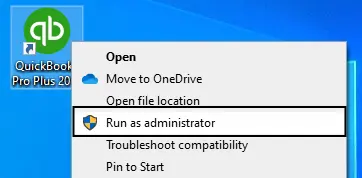
- Right-click on the QB Desktop icon.
- Select Run as administrator from the menu.

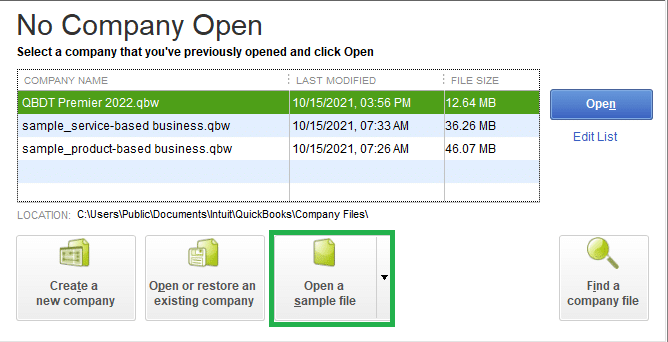
- Wait for the No Company Open window to launch.
- Hit the Open a sample file dropdown.

- Choose any file from the shown list.
- Wait for the file to open.
If you were successful in opening a sample file in QB Desktop, the problem may lie within the installation files. Proceed to the next method for resolving this issue.
Method 8: Run the Quick Fix My Program
In order to repair the application to overcome the QuickBooks error 6000 103, you can run this tool with the following steps.
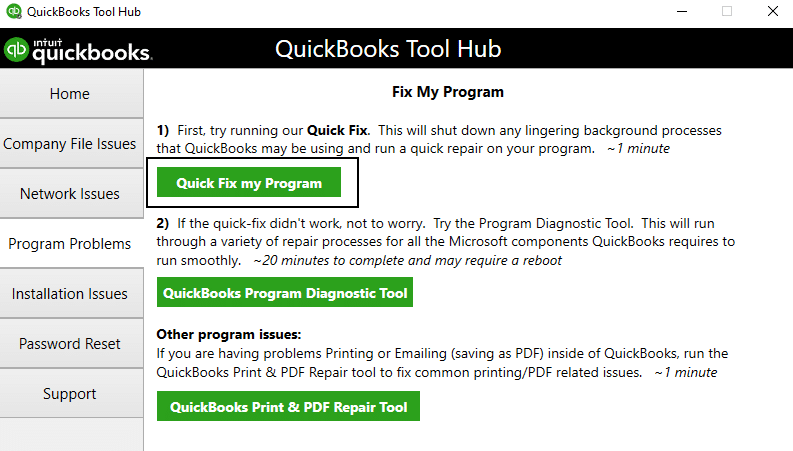
- Launch the QB Tool Hub.
- Select Program Problems from the left panel.
- Choose the Quick Fix My Program.

- Let the repair process run.
- Once over, head to QuickBooks Enterprise.
- Finally, sign in to your company file.
After finishing this process, you can continue your work without any interruptions. Alternatively, you can use the following method to avoid the issue of the company file not opening.
Method 9: Launch the QuickBooks Install Diagnostic tool
Similar to the Quick Fix My Program, you can use this tool to repair the installation files as well. Go ahead and download the QuickBooks Tool Hub, where you will find this tool ready to be used. You can use this detailed guide to know how to use the QB Install Diagnostic tool with easy-to-follow steps.
Any QuickBooks Desktop installation errors will be repaired as you use this tool. Subsequently, the QuickBooks error 6000 103 will not disrupt your work any longer. If the company file still won’t open, you can try out the next procedure.
Method 10: Create a Company File Copy on the Desktop
The original location of the file may be leading to this error and hindering your work. Moreover, the folder containing the company file might lack required permissions or cause limitations due to exceeding the path. Follow the steps outlined below to copy it to the Desktop and prevent QuickBooks error 6000 103.
- Open Windows File Explorer.
- Locate the folder containing the company file.
- Select the file with .QBW at the end.
- Choose Copy from the menu.
- Return to Windows Homescreen.
- Right-click on the screen.
- Hit Paste from the menu.
- Press and hold the Ctrl key.
- Double-click the QBDT icon.
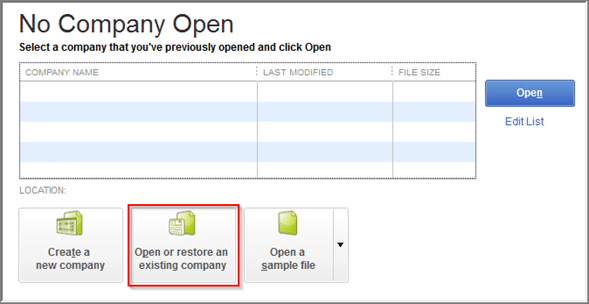
- You will see the No Company Open window.
- Click Open or Restore an existing company.

- Then, select the file from the Desktop.
If you can access it now, then the problem may have been with the folder. In case you are still unable to open the file, then you will need to repair the company file thoroughly, with reference to this guide. Move on to the following method for more fixations.
Method 11: End Ongoing Processes for QuickBooks Enterprise
When there is more than one process actively running for QB, it can slow down the application’s performance.
- Log in as a Windows admin user.
- Hit Ctrl, Shift, and Esc keys.
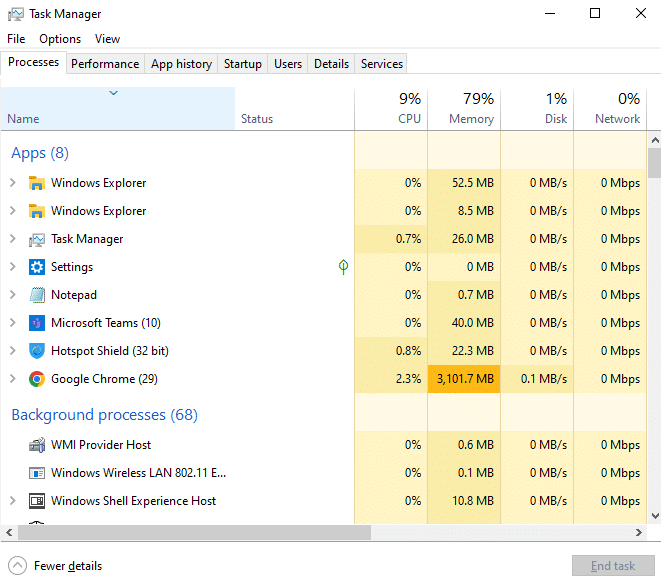
- Wait for Task Manager to open.

- Tap on Processes from the top bar.
- Locate the following processes:
- QBW32.EXE
- Qbupdate.exe
- QBDBMgr.exe
- Right-click on each.
- Select End task from the menu.
If you still face the QuickBooks error 6000 103, move on to the next solution.
Method 12: Review the Windows Folder Permissions
If the folder containing the company file does not have the required access to share it, you might face this problem. Follow the steps outlined below to ensure that QuickBooksDBXX and QBCFMonitorService have Full Control.
- Hit Windows and E keys.
- The File Explorer will open.
- Locate the folder storing the company file.
- Select Properties from the menu.
- Head to the Security tab.
- Press the Advanced button.
- Choose the QBDataServiceUserXX service.
- Click the Edit icon.
- Review the following permissions to Allowed:
- Traverse Folder/Execute File
- List Folder/Read Data
- Read Attributes
- Read Extended Attributes
- Create Files/Write Data
- Create Folders/Append Data
- Write Attributes
- Write Extended Attributes
- Read Permissions
- Hit OK to close it.
Now, in order to set the permissions correctly for the company file to prevent QuickBooks error 6000 103, take the steps given below.
- Open the File Explorer.
- Locate and select the following folders:
- C:\Program Data\Intuit\Entitlement Client\v8
- C:\Program Data\Intuit\Entitlement Client\v6.0
- C:\Program Data\Intuit\Entitlement Client\v5
- C:\Program Data\Intuit\Entitlement Client\v3
- C:\Program Data\Intuit\Entitlement Client
- C:\Program Data\Intuit\QuickBooks Enterprise Solutions X.0 (X = version) or C:\Program Data\Intuit\QuickBooks 20XX (XX = year)
- C:\Program Data\COMMON FILES\INTUIT
- C:\Program Data\COMMON FILES\INTUIT\QUICKBOOKS
- C:\Users\Public\Public Documents\Intuit\QuickBooks\FAMXX (XX = year)
- C:\Users\Public\Public Documents\Intuit\QuickBooks\Company Files
- C:\Users\Public\Public Documents\Intuit\QuickBooks\Sample Company Files\QuickBooks Enterprise Solutions X.0 (X = version) or C:\Users\Public\Public Documents\Intuit\QuickBooks\Sample Company Files\QuickBooks 20XX (XX = year)
- Click on the Properties option.
- Tap on Security from the top bar.
- Under the Group or User Name, tick Everyone.
- Select the Full Control option.
- Next, press Apply.
- Lastly, hit OK.
Now, you should be able to open the company file without any problem. If you do encounter the same issue again, move on to the next procedure.
Method 13: Configure the Windows Permissions to Share the Company File
You may not be able to access the company file over a shared network if it lacks the required permissions. Take the steps below for your version of the Windows operating system to carry out this process for resolving QuickBooks error 6000 103.
For Windows 10 or 11
- Head to File Explorer.
- Find the folder containing the company file.
- Hit Properties from the menu.
- Click on the Sharing tab.
- Then, tap Share add.
- Select the QBDataServiceUserXX.
- Update permissions to Full Control.
- Finally, hit Share.
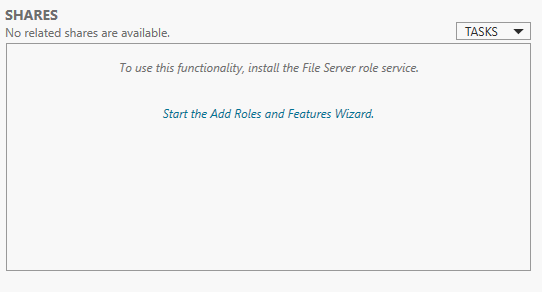
For Windows Server 2022
- Make sure that File and Storage Services are installed.
- Hit Windows and R keys to open the Run dialog box.
- Enter ServerManager and press OK.

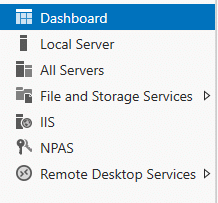
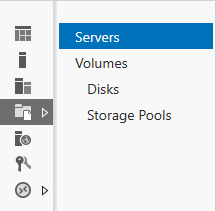
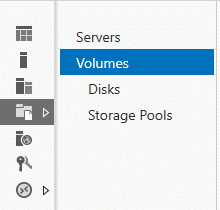
- Select File and Storage Services.

- Then, click on Volumes and go to the Shares section.

- From the Task dropdown, choose New Share.

- You will see a File Share Profile list.
- Each profile includes a description that highlights its differences.
- Tap on the SMB Share – Quick button.
- Head to the Share location section.
- Choose Type a custom path.
- You can share your file through Browse.
- Specify a folder of your choice.
- Press the Select a folder option.
- Then, tap Next.
- You will see the Configure Share settings window.
- Leave the default selections as they are.
- Hit Next to proceed.
After you have completed this procedure, there will be no problem while opening the company file in multi-user mode. If the QB error 6000 103 still troubles you, try the method laid out next.
Method 14: Update the Windows Firewall and Security Software
As you may know, these applications are designed to safeguard your PC. However, they can sometimes detect QuickBooks Desktop as a threat. This can lead to the internet connection being restricted for QBDT, breaking off its connection with the Intuit server.
In order to smoothly access the company file, you must update the Firewall and security software settings for QB Enterprise. You can refer to this guide to add exclusions in Windows Firewall ports. But, if you still continue to face the company file won’t open issue, proceed to the solution below.
Method 15: Check the Character Limit of the File Path
Many times, if the path for the company file is too long, it means that it is stored within and within folders. Then, it can cause common issues and might make the company file inaccessible to you. The folder path for the company file must not exceed the limit of 210 characters. Therefore, follow the steps outlined below to verify this and fix it if needed.
- Head to Windows File Explorer.
- Locate the folder that contains the company file.
- Copy the folder path from the navigation bar.
- Open Windows Notepad.
- Paste the copied path in Notepad.
- Alternatively, you can use any documentation software.
- Count the number of characters in the path.
- It should stay within the limit of 210 characters.
- For instance, the path listed below is 126 characters.
- C: Documents and Settings/ All Users/ Documents/Intuit/QuickBooks/Sample Company Files/QuickBooks 2025/Sample_company_file.qbw
- In case the file path exceeds the limit:
- Restore the backup company file.
- Make sure to stay within the limit of 210 characters.
Once you have completed these steps, you can now resume your work without any hassle. We hope that these methods were helpful to you in fixing the issue where the company file won’t open.
An Overview Table for QuickBooks Error 6000 103
In this section, you can find a tabulated overview of the QuickBooks error code 6000 103, as we discussed throughout the blog. It is a part of the 6000 series errors, which usually take place when you can’t open the company file on QB Desktop.
| Error code | 6000 103 |
| Error series | 6000 |
| Root causes | The firewall is blocking the connection between QB Desktop and the Intuit server, the company file is hosted on multiple servers, you are not logged in as an admin user, or the company file is damaged or corrupted.ND and .TLG files, or server PC and workstations lost the connection, backup company file got corrupted on an external device or network drive, Windows operating system is damaged or missing crucial components. The Windows Registry files are corrupted, multiple programs are running simultaneously, a folder containing the company file is damaged, the QuickBooks Enterprise application is installed improperly, or installation files got destroyed, a lack of admin permissions, multi-user mode is not hosted properly, or the QuickBooks Database Server Manager is set up improperly. |
| Problems you may face | QuickBooks is running slow or glitching frequently, a decline in Windows operating system performance, the system fails to support multiple programs at once, QB Desktop keeps crashing or freezing, and you cannot convert an accountant’s copy transfer file to the accountant’s copy. |
| Working resolutions | Reviewing the multi-user mode on workstations, running the QB File Doctor Tool, and renaming.ND and .TLG files, restoring a backup company file, updating to latest version of QB, launching the QuickBooks Database Server Manager, opening a sample company file, utilizing the Quick Fix My Program, using QB Install Diagnostic tool, copying the company file to desktop, ending all ongoing QB processes, reviewing the folder permissions and modifying permissions for sharing company file in Windows, configuring the Firewall and security software, and checking the character limit of the file path. |
| Tools required | QuickBooks Database Server Manager, QuickBooks Tools Hub, Quick Fix my Program, QuickBooks Install Diagnostic Tool, QuickBooks File Doctor Tool. |
Bringing It All Together
There are various sources for the QuickBooks error 6000 103, which may prevent you from opening the company file. For example, it can take place due to a corrupted or damaged company file or multiple host computers. In order to resolve it, you can review the multi-user mode across servers as well as repair the company file through QuickBooks Tool Hub. Moreover, we have outlined several other resolutions that you can easily carry out through this blog.
However, resolving QuickBooks error 6000 103 yourself can be overwhelming due to a lack of technical experience. That’s where we step in. Our team of Accounting Helpline’s experts will guide you and provide quick fixes for this problem. Reach out to us at 1.855.738.2784.
Frequently Asked Questions (FAQs)
How do I fix error 6000 103 in QuickBooks?
You can fix the QuickBooks Desktop error 6000 103 by performing the following resolutions.
– Review the multi-user mode across computers.
– Use the QB File Doctor Tool.
– Rename ND and TLG files.
– Restore a backup company file.
– Update to the latest version of QB.
– Launching the QuickBooks Database Server Manager.
– Open a sample company file.
– Utilize the Quick Fix My Program.
Why does error 6000 103 in QuickBooks Desktop occur?
The QuickBooks error 6000 103 can occur due to a number of reasons, but primarily because of a damaged or corrupted company file, or when multiple computers are set as hosts. The secondary reasons include factors like the firewall blocking the connection between QB Desktop and the Intuit server, or a damaged or corrupted ND and TLG files, or a lack of admin permissions in Windows.
What does QuickBooks error 6000 103 mean?
The error code 6000 103 in QuickBooks Desktop prevents you from opening the company file on your PC and in multi-user mode. This is a really troublesome problem because it completely disrupts your workflow. It is essential that you address this issue ASAP to realign the software and continue with your work in a timely manner.
Will I lose data if I rename the ND or TLG files?
No, when you rename these files, your data will not be impacted. Moreover, when you open QB Desktop or a company file, new ND and TLG files will be created automatically. This simple process helps in getting rid of the damaged or corrupted configuration files while creating new ones.
Related Posts-
How To Fix QuickBooks Error PS038? Easiest Method
QuickBooks Error H202 in Multi-User & Solutions to Fix it
How to Fix QuickBooks Payroll Error Message 15240 After Update
QuickBooks Error H101 | 8 Proven Methods to Resolve It
I Encountered QuickBooks Error 12038! – What’s Next?
QuickBooks Error 1903: How To Fix with Easy Methods

Edward Martin is a Technical Content Writer for our leading Accounting firm. He has over 10 years of experience in QuickBooks and Xero. He has also worked with Sage, FreshBooks, and many other software platforms. Edward’s passion for clarity, accuracy, and innovation is evident in his writing. He is well versed in how to simplify complex technical concepts and turn them into easy-to-understand content for our readers.